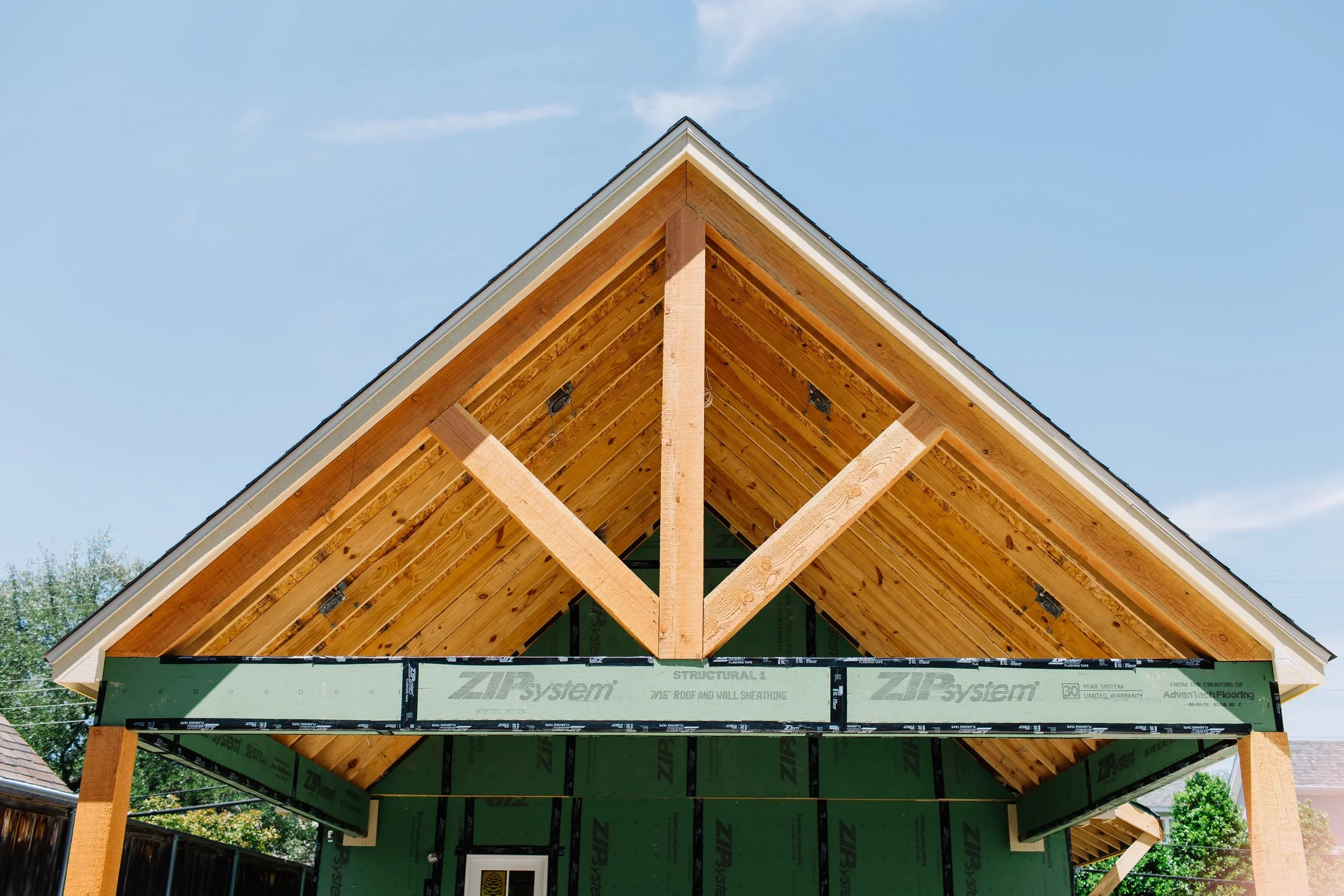
How to Choose a Home Addition Contractor in Fort Worth
How Fort Worth homeowners should vet a home addition contractor — credentials, references, and the questions that reveal real expertise.
Why Choosing the Wrong Contractor Is the Most Expensive Mistake You Can Make
A home addition is probably the largest construction project you'll ever do on your home. The wrong contractor costs you money, time, stress, and sometimes — the structural integrity of your house.
The good news: contractors who will cause problems are usually easy to identify before you hire them, if you know what to look for.
This isn't a generic checklist. It's the specific things we've seen separate good contractors from bad ones — written by someone who's been building in Fort Worth since 2016.
---
The First Filter: Design-Build vs. Coordination-Only
The most important question you can ask any home addition contractor is: do you do the design in-house, or do I need to hire an architect separately?
This single question separates two fundamentally different contractor models.
The coordination-only model: You hire an architect. The architect designs your addition. You hire a contractor to build it. The contractor and architect coordinate — or more accurately, they don't, and you spend your project managing the gap between them. When something goes wrong, the architect says the contractor built it wrong. The contractor says the plans were unclear. You're in the middle.
The design-build model: One company is responsible for both the design and the construction. There's one contract, one point of contact, and no gap to fall through. When a construction detail doesn't match the design intent, the same team solves it — no finger-pointing between two separate companies.
For home additions, design-build is almost always better. The design decisions are made by people who understand construction costs and realities. The construction is done by crews who helped detail the design. Problems get solved faster because there's one party accountable for the outcome.
If a contractor tells you that you need to hire your own architect, factor in the architecture fees (typically 8–12% of construction cost), the coordination time, and the risk of the design-construction gap. It adds up.
---
Five Questions to Ask Every Contractor
1. Who does the design — you, or a separate architect?
You want to hear "we do design in-house" or "we have an in-house design team." You do not want to hear "you'll work with your own architect and then we build what they design."
2. Who handles the permits?
A serious home addition contractor handles all permitting — application, plan submission, city comments, inspections. If the contractor expects you to pull the permits yourself, that's a red flag. Permit management is part of the job.
3. Who will be my point of contact during construction?
You want a project manager — one person, consistent from start to finish. You do not want to be passed between a salesperson who sold you the project and a site supervisor you've never met who manages the actual build.
4. Can I see completed projects similar to mine?
Portfolio photos are marketing. Ask to see actual completed projects in Fort Worth neighborhoods similar to yours. Better yet, ask if you can speak with a past client who had a similar project. A contractor who has done what you're planning should have references you can contact.
5. What happens when costs change during construction?
Surprises happen in every existing home. Old wiring, unexpected plumbing, structural anomalies — they're common. How a contractor handles scope changes and cost increases mid-project is one of the most important things to understand before you sign. Ask for their change order process and look at an example.
---
What to Look for in the Portfolio
Look for architectural integration. Does the addition look like it was always part of the home, or does it look like a box tacked onto the back? A good addition matches the existing roofline, brick, and trim — so you can't tell where the original house ends and the addition begins.
Look for variety. A contractor who has only done one type of addition (all bump-outs, or all second stories) has a narrower skill set than one who has built across project types.
Look for Fort Worth-specific experience. Have they built in historic districts? Do they have projects in neighborhoods with similar housing stock to yours? Local experience matters for zoning, permit offices, and construction conditions specific to this city.
---
Red Flags to Take Seriously
The estimate comes via email without a site visit. Any contractor quoting a home addition without walking your property is giving you a number based on guesses. A serious contractor visits the site before pricing anything.
They're the cheapest by a significant margin. The low bid wins by cutting something. Either the scope is narrower than what the others included, the finish quality is lower, or the labor cost is lower — which usually means less experienced crews or subcontractors without adequate supervision.
They can't explain the permit process for your city. If a contractor says "the permit is usually pretty quick" without being able to speak specifically to your city, your project type, and whether your home is in any overlay districts — they haven't done this many times in your area.
There's pressure to sign quickly. Good contractors have projects lined up. A contractor who needs you to sign today to hold your spot is a contractor with empty weeks in their schedule. That's a reason for concern, not urgency.
The contract is vague about scope. The contract should describe exactly what's being built — square footage, room types, finish specifications, who handles what. Vague scope language is how disputes start.
---
The Cost Conversation
Be skeptical of any contractor who won't talk about money early. A good home addition contractor should be able to give you a rough range in the first conversation — based on your project type and scope — before any design work begins.
They should also be clear about what's included in the price versus what's an allowance. Allowances are a common source of surprises: you're quoted $2,000 for fixtures and you choose $6,000 fixtures. That's not the contractor's fault — but if allowances aren't clearly flagged in the proposal, you don't see it coming.
The best contractors work cost-plus or give you a real fixed-price contract with a clear scope. They show you where the money goes. They don't hide markups in opaque line items.
---
What a First Meeting Should Feel Like
The first conversation with a contractor should feel like a straightforward professional conversation — not a sales pitch. They should ask more questions than they answer. They should be honest about what they don't know yet. They should tell you what the process looks like before you've committed to anything.
If the first meeting feels like you're being sold to, you probably are.
The contractors who do the best work in Fort Worth are busy because of their reputation — not because of their marketing. They'll be honest with you about timeline, cost, and what's possible. And they'll tell you if your project isn't the right fit for them.
That's who you want building your addition.
Ready to Start Your Home Addition Project?
Schedule a free consultation and get answers specific to your property — no obligation.
Related Articles

Second Story vs. Bump-Out for Fort Worth Additions
Two common addition types, two very different projects. How to figure out which one fits your Fort Worth property, budget, and goals.

5 Things to Know Before a Fort Worth Home Addition
After 40+ Fort Worth home addition builds, we keep seeing the same mistakes. Here's what to know before you start so yours isn't one.